
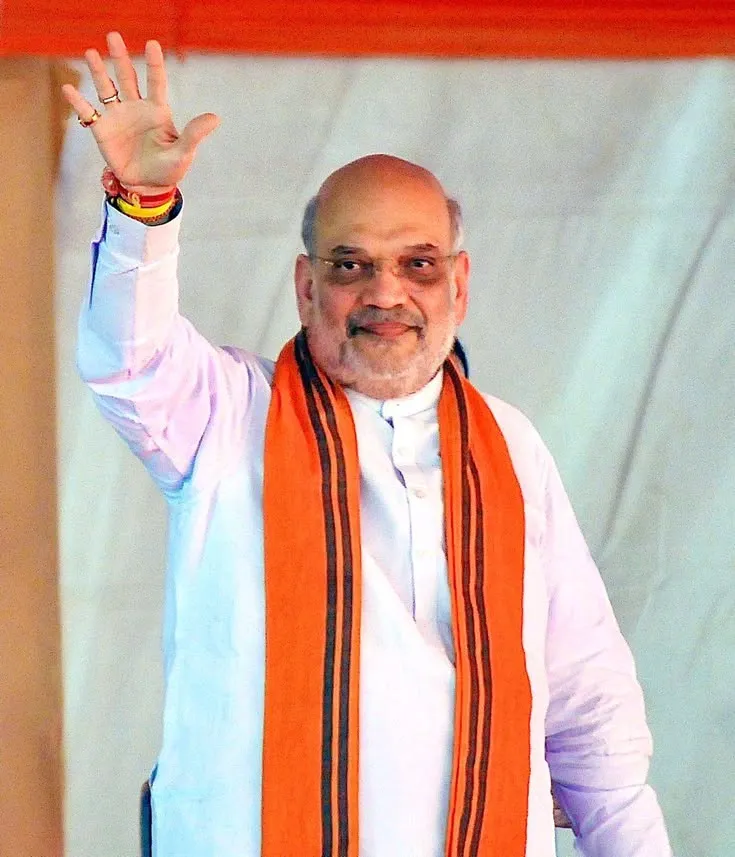
Union Home Minister Amit Shah has set a clear timeline for one of the Bharatiya Janata Party’s long-standing policy goals. Speaking in Mumbai, he expressed confidence that the Uniform Civil Code would be implemented across all 21 states governed by the BJP-led National Democratic Alliance before the 2029 Lok Sabha elections. The statement places a firm deadline on a reform that the party has consistently described as essential for equality and national integration.
A State-by-State Push Toward Uniform Civil Code
Shah linked the UCC commitment to earlier decisions taken by the government. He recalled the abolition of triple talaq, which the government presented as a step toward equal rights for Muslim women, and the abrogation of Article 370, which he said was achieved without violence and fully integrated Jammu and Kashmir with the rest of India. Building on that record, he said several states had already introduced the Uniform Civil Code and that the resolve now was to extend it to every NDA-ruled state before the next general elections.
The approach is deliberately federal. Rather than waiting for a single national law, the government and its allies are advancing the code through state legislatures. Marriage, divorce, inheritance, succession and related personal law matters fall under the Concurrent List, giving states the legislative competence to enact their own versions. Uttarakhand became the first state to bring a UCC into force in January 2025. Gujarat, Assam and Madhya Pradesh have passed similar legislation and are at various stages of receiving presidential assent and formal notification. Other NDA-governed states, including Maharashtra, are in the process of drafting or preparing bills.
This state-led model allows for some variation while pursuing the common objective of replacing religion-based personal laws with a more uniform civil framework. Tribal communities have generally been kept outside the purview of these codes so that customary practices and identity can be preserved.
Illegal Immigration and Internal Security
Alongside the UCC announcement, Shah reiterated the government’s firm stance on illegal immigration. He stated that every individual who had entered the country illegally would be identified and that illegal Bangladeshi migrants would be deported. When asked about specific methods or the baseline year for any National Register of Citizens exercise, particularly in the context of Manipur, he declined to disclose operational details. He noted that discussions with alliance partners and other stakeholders were continuing and that revealing enforcement tools would only alert those the government sought to detect.
The remarks form part of a broader emphasis on internal security and demographic management that the Home Minister has repeatedly highlighted. The government has framed the detection and deportation of illegal immigrants as both a legal obligation and a necessity for national security and the rights of citizens.
Anti-Drug Campaign and the Road to 2029
Shah also addressed the ongoing drive against narcotics. He has previously described the period leading up to 2029 as critical for making India drug-free, linking the effort to the larger goal of protecting the country’s youth and supporting long-term development. The anti-drug campaign, often referred to under the Nasha Mukt Bharat framework, involves coordination between central agencies, state anti-narcotics task forces and public awareness initiatives. Shah has indicated that he would travel to states to strengthen the campaign and expressed confidence that the menace could be overcome with sustained effort.
The drug control agenda is presented as a national security and social priority rather than a purely law-and-order issue. Officials have stressed demand reduction, supply interdiction and harm reduction as interconnected pillars of the strategy.
Marking 25 Years of Leadership
The Mumbai interaction also provided a platform to announce a major political outreach programme. The NDA will undertake a month-long Seva Sankalp Abhiyan beginning on 17 September 2026. The campaign is designed to mark Prime Minister Narendra Modi’s 25 years in elected and high administrative office, covering his tenure as Chief Minister of Gujarat and as Prime Minister. It is scheduled to run across districts, parliamentary and assembly constituencies, and polling booths, with participation from alliance partners and voluntary organisations.
The initiative is intended to highlight welfare schemes and governance achievements while mobilising the party’s organisational network. By tying the campaign to a significant personal and political milestone, the leadership aims to reinforce continuity and public engagement ahead of the next electoral cycle.
Political and Constitutional Context
The Uniform Civil Code has remained a core ideological commitment for the BJP for decades. Its inclusion in successive election manifestos, including the 2024 document, kept the issue alive even when national legislation faced practical and political hurdles. The current strategy of advancing the code state by state reflects both constitutional opportunity and political pragmatism. Success in the NDA-ruled states would create a substantial body of operational experience and legal precedent before any future national conversation.
Critics have long argued that a uniform code risks undermining the diversity of personal laws and cultural practices. Supporters counter that equal civil rights in matters of marriage, divorce and inheritance strengthen the constitutional promise of equality before the law. Shah’s latest statement does not resolve that debate, but it does convert a general aspiration into a time-bound programme covering the majority of India’s population living under NDA governments.
Looking Toward 2029
The combination of announcements—UCC expansion, continued action against illegal immigration, intensification of the anti-drug campaign, and a nationwide outreach centred on the Prime Minister’s 25-year milestone—outlines the themes the ruling alliance intends to emphasise in the coming years. Implementation will depend on legislative follow-through in individual states, the pace of presidential assent where required, and the ability to manage social and political responses.
For now, the Home Minister has placed a public marker: before the 2029 Lok Sabha elections, the Uniform Civil Code is expected to be in force across all 21 NDA-governed states. Whether that target is met will be one of the clearer tests of the government’s capacity to convert long-held policy goals into widespread legal reality.
Read more – huggymonster.com
