
International relations in 2026 are unfolding against a backdrop of heightened uncertainty and shifting power dynamics. Multilateral institutions face sustained pressure as governments prioritise national interests, protectionist measures expand, and traditional alliances undergo re-evaluation. Analysts tracking global risks highlight geoeconomic confrontation and state-based armed conflict as leading concerns capable of triggering wider instability.
The Retreat of Multilateralism
A clear pattern has emerged in which cooperative frameworks struggle to maintain influence. Declining trust, reduced transparency and weaker adherence to established rules have complicated efforts to manage shared challenges such as climate coordination, global health and economic stability. Many observers describe the emerging landscape as multipolar or fragmented, with middle and great powers contesting regional norms rather than reinforcing a single rules-based order.
This shift has practical consequences. Trade and investment flows face greater friction as countries deploy tariffs, export controls and other tools of economic statecraft. The resulting environment rewards those able to diversify partnerships quickly while exposing smaller states to sharper pressures from larger competitors.
Persistent Armed Conflicts and Regional Flash points
Several long-running conflicts continue to shape the international agenda. The war in Ukraine remains a central focus, with ongoing military activity, diplomatic initiatives aimed at restarting talks, and debates over energy and sanctions policies. European states have intensified support efforts even as approaches from major external actors diverge.
In the Middle East, tensions involving Iran, Israel and related actors persist. Diplomatic exchanges have alternated with periods of heightened military activity, keeping the region under close scrutiny. Elsewhere, situations in Myanmar, the Korean Peninsula and the Taiwan Strait illustrate how local dynamics can rapidly acquire broader strategic significance. Maritime and aerial presence around Taiwan, combined with high-level discussions between major powers, keeps cross-strait relations a focal point of attention.
Conflict trackers also note continued insecurity in parts of Southeast Asia and Africa, where domestic political pressures and external involvement intersect. The cumulative effect is a global environment in which the threshold for the use of force appears lower and the risk of spillover remains elevated.
Geoeconomic Competition and Strategic Resources
Economic tools have become central instruments of statecraft. Tariffs, restrictions on critical technologies and competition over supply chains for minerals essential to energy transition and advanced manufacturing feature prominently in policy discussions. Countries are reassessing dependence on single suppliers and seeking to build more resilient networks, often at the cost of higher short-term expenses.
Defence spending continues to rise in multiple regions. Arms sales have reached elevated levels, reflecting both the demands of active conflicts and the desire of governments to modernise forces amid perceived uncertainty. Technological advances, including applications of artificial intelligence in military contexts, add new dimensions to traditional capability races.
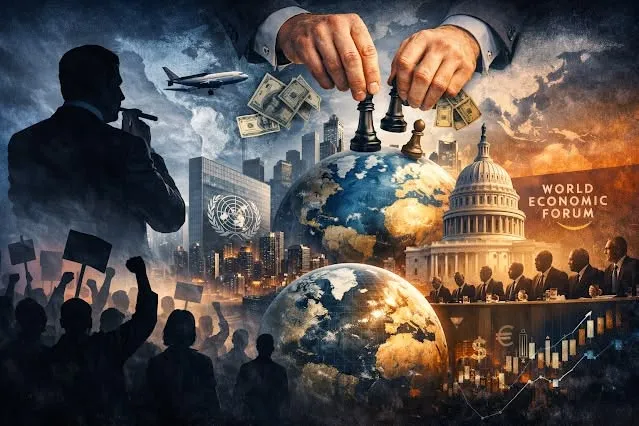
Domestic Politics and Their International Echoes
Electoral cycles in several countries carry implications beyond national borders. Contests in major democracies and semi-authoritarian systems are testing the resilience of institutional norms. Outcomes influence alliance cohesion, foreign policy orientation and the credibility of commitments to partners. In some cases, youth-led or protest-driven movements have challenged long-standing leadership, illustrating the interaction between domestic discontent and international positioning.
Authoritarian regimes have expanded the reach of state media and information strategies, contributing to a more contested information environment. At the same time, democratic systems face internal polarisation that can constrain consistent external engagement.
Alliance Dynamics and Burden-Sharing Debates
Traditional security alliances are adapting to new expectations. Discussions within NATO about resource contributions and strategic priorities remain active. European states confront questions about greater autonomy in defence and industrial capacity while managing relations with the United States. In the Indo-Pacific, partners continue to balance deterrence measures with efforts to maintain channels of communication with major regional powers.
The overall picture is one of transactional diplomacy gaining ground. Countries form issue-specific coalitions rather than relying solely on permanent institutional structures. This flexibility can produce rapid responses to particular crises yet complicates longer-term planning and the enforcement of shared standards.
Looking Ahead
The combination of geoeconomic rivalry, unresolved conflicts and institutional strain defines the current phase of international relations. Progress on collective problems depends increasingly on the willingness of major powers to manage competition without allowing it to spill into uncontrolled confrontation. Middle powers and regional organisations may find greater space to shape outcomes in their immediate neighbourhoods, provided they can navigate the competing pressures of larger actors.
For policymakers and observers, the practical task is to distinguish between temporary fluctuations and structural shifts. Monitoring developments in key theatres—Ukraine, the Middle East, the Taiwan Strait and critical supply chains—offers early indicators of whether tensions will intensify or stabilise. Equally important is attention to domestic political trajectories in pivotal states, as internal changes often recalibrate external behaviour.
In this environment, resilience at both national and institutional levels becomes a central objective. Diversified economic relationships, credible defence postures and open channels for crisis communication form the practical foundations for navigating a more fragmented international system. The trends visible in 2026 suggest that adaptability and careful calibration of interests will remain essential skills for states seeking to protect their security and prosperity amid ongoing global flux.
Read more – Marathidailyquotes.com
