
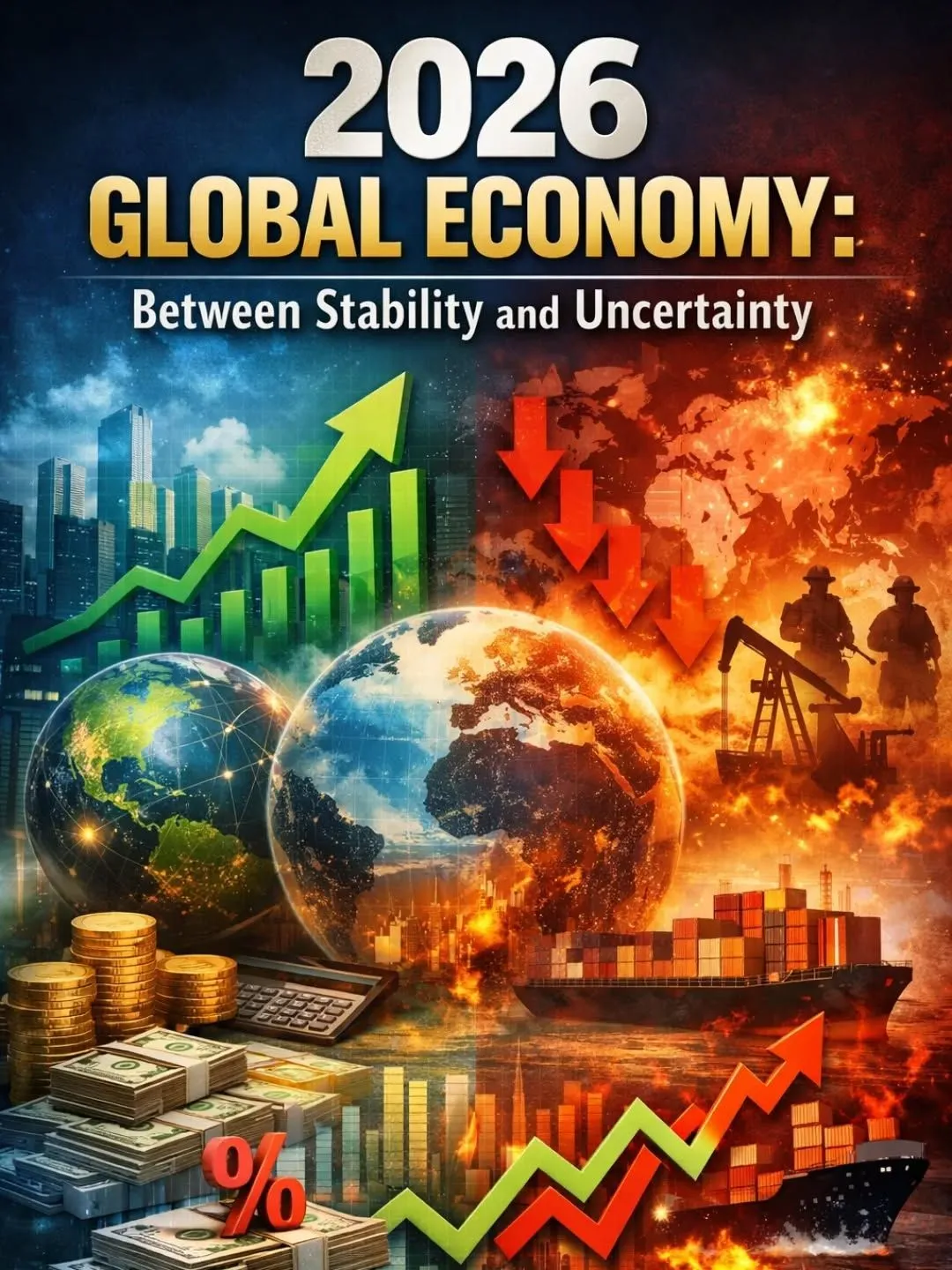
Global economic conditions in 2026 present a complex landscape of resilience tempered by significant strains. According to the International Monetary Fund’s October 2026 World Economic Outlook, global growth is projected at 3.1 percent for the year, a modest upward revision from earlier estimates, before rising to 3.4 percent in 2027. This follows stronger expansion of 3.5 percent in 2025. While the overall figure appears stable, it masks sharp divergences across countries and sectors that are actively reshaping opportunities and challenges for businesses worldwide.
The outlook reflects two powerful opposing forces: robust investment in artificial intelligence infrastructure that is supporting activity in key economies, and an energy price shock linked to ongoing conflict in the Middle East that is raising costs and weighing on growth elsewhere.
AI Investment as a Major Growth Driver
Strong capital spending on artificial intelligence is a primary reason the global forecast has held up better than many expected. Investment in AI-related infrastructure, data centers, and hardware is lifting growth in advanced economies and in countries that supply critical components and materials. Economies deeply integrated into AI value chains—such as the United States, parts of Asia including South Korea, and certain technology exporters—are seeing relatively stronger performance.
This wave of investment is creating demand for semiconductors, specialized equipment, energy infrastructure, and related services. Businesses positioned in these supply chains or able to apply AI tools to improve productivity, customer experience, or operational efficiency stand to benefit. At the same time, the concentration of gains raises questions about the breadth of the boom. Growth is becoming more concentrated, with a smaller number of economies accounting for the bulk of global expansion.
Energy Prices and Inflationary Pressures
The conflict in the Middle East has kept oil prices elevated, with assumptions of averages near 96 dollars per barrel in 2026. Higher energy costs are contributing to a temporary rise in global headline inflation, projected at 4.7 percent in 2026 before easing to 4.1 percent in 2027. Energy-importing economies face higher import bills, weaker real incomes, and more constrained policy space.
For businesses, this environment translates into elevated operating costs in transportation, manufacturing, and logistics. Companies with significant energy exposure must manage input price volatility carefully. Those able to improve energy efficiency, diversify supply sources, or pass through costs strategically are better positioned. The inflationary impulse also influences central bank decisions and borrowing costs, affecting investment planning and working capital management.
Divergent Regional and Country Performance
The global picture is increasingly K-shaped. Countries with limited direct exposure to the energy shock and strong links to technology demand are holding up or strengthening. The United States is projected to grow at 2.3 percent in both 2026 and 2027, supported by consumption, fiscal measures, and technology investment. China is expected to expand around 4.5 percent in 2026, moderating from the previous year. Euro area growth remains subdued near 1.1 percent, reflecting energy headwinds and softer demand.
In contrast, many energy-importing emerging markets and developing economies face weaker prospects. Growth in these regions is projected to slow, and a significant share of countries have seen their forecasts revised downward. Gulf economies directly affected by the conflict have experienced sharp downgrades. This divergence means business strategies must be highly tailored by market. Expansion plans viable in technology-linked or energy-resilient economies may face greater headwinds in regions under stronger cost and demand pressure.
Trade, Debt, and Policy Constraints
World trade volume growth is expected to slow in 2026 amid tariffs, production chain adjustments, and ongoing geopolitical tensions, even as technology-related trade remains relatively strong. Businesses reliant on complex cross-border supply chains continue to navigate uncertainty around tariffs, export controls, and shifting trade patterns.
Rising public debt levels and higher government borrowing costs add another layer of risk. Many countries have limited fiscal space after successive shocks. Elevated bond yields can tighten financial conditions, raise the cost of capital for firms, and constrain public investment that often supports private sector activity. Policymakers face urgent choices around rebuilding buffers while supporting growth.
Implications for Business Strategy
These trends require businesses to prioritize adaptability and resilience. Companies investing in AI capabilities—whether for process automation, data analytics, product development, or customer engagement—can capture productivity gains and align with one of the strongest demand drivers. Diversifying energy sources, improving operational efficiency, and building flexibility into supply chains help mitigate cost and disruption risks.
Geographic strategy matters more than in more synchronized growth environments. Firms may need to reassess market priorities, favoring regions with stronger AI or technology linkages while carefully managing exposure to energy-vulnerable economies. Scenario planning around potential further energy price spikes, inflation persistence, or shifts in AI investment sentiment has become essential.
Access to financing will also remain a differentiator. In an environment of higher yields and tighter conditions for some borrowers, strong balance sheets and clear value propositions support investment capacity.
Risks and the Path Ahead
Downside risks remain prominent. A more prolonged or intensified Middle East conflict could keep energy and food prices elevated, revive broader inflationary pressures, and further weigh on growth. Extreme weather events, rising debt vulnerabilities, and any sharp reassessment of AI-related valuations could also test resilience. Upside possibilities include more persistent AI investment, faster productivity gains, or improved energy market conditions.
Overall, 2026 is characterized by resilience under strain. Aggregate growth remains positive, supported by technology investment, yet the distribution of that growth is uneven and subject to significant risks. Businesses that understand these divergences, invest selectively in productivity-enhancing technologies, manage cost pressures carefully, and maintain flexible operating models are better equipped to navigate the environment and identify opportunities for sustainable expansion. The global economy continues to adapt, but the quality and breadth of growth will depend heavily on how governments and firms respond to the urgent choices ahead.
Read more – llookwhatmomfound.com
