Thirteen years after the deadly ambush in Chhattisgarh’s Jhiram Ghati, a special National Investigation Agency court in Jagdalpur has convicted all ten accused Maoists. The May 25, 2013 attack killed 27 people, including senior Congress leaders, and nearly wiped out the party’s top leadership in the state. At the centre of the Maoists’ target list was Mahendra Karma, the tribal leader known as the ‘Tiger of Bastar’ and the public face of the controversial Salwa Judum movement. The verdict has reopened questions about his legacy, the unfinished demands of his family, and the long struggle against left-wing extremism in the region.
The Attack and the Court Verdict
On that afternoon in 2013, Maoists ambushed a Congress Parivartan Rally convoy near the Bastar-Sukma border. Among the dead were state Congress president Nand Kumar Patel and his son Dinesh, former Union minister Vidyacharan Shukla, former MLA Uday Mudliyar, and Mahendra Karma. The assault combined a landmine blast with heavy firing and was described as one of the most audacious strikes against the political class in the Red Corridor.
After a trial lasting more than a decade and involving hundreds of hearings, the NIA court convicted Pramila Modiyam, Chaitu Lekam, Sumita Punem Modiyam, Mukka Mandvi, Kosa Kavasi, Aayata Markam, Madkami Deva, Joga Madkami, Banjami Anna, and Mahadev Nag. Sentencing is scheduled for mid-September. Several higher-ranking Maoist leaders named in the investigation were either killed in encounters, surrendered, or remain at large. The court focused on those who stood trial, delivering a clear finding of guilt against the ten accused.
Mahendra Karma: Tribal Leader and Anti-Maoist Voice
Mahendra Karma emerged as one of the most prominent tribal voices against Maoist influence in Bastar. A Congress leader and former Leader of the Opposition, he was instrumental in mobilising local communities who felt trapped between insurgent violence and state security operations. Supporters remember him as a man who understood the terrain, the people, and the cost of prolonged conflict. His willingness to confront the Maoists earned him both admiration and intense enmity.
Karma’s most visible and contested contribution was his association with Salwa Judum. Launched in the mid-2000s, the movement began as a local uprising against Maoist control and later involved the recruitment of civilians as Special Police Officers. Proponents argued it gave ordinary villagers a means to resist extortion, forced recruitment, and killings by the insurgents. Critics, including human rights groups, accused Salwa Judum of serious excesses, including displacement, arson, and violence against civilians. In 2011, the Supreme Court declared the arming of civilians as SPOs unconstitutional, effectively ending the formal structure of the movement.
Even after the judicial ruling, Karma remained a symbol of resistance in the eyes of many in Bastar and a marked man for the Maoists. The 2013 attack was widely understood as the culmination of a long-standing effort to eliminate him.
Family’s Call for Deeper Scrutiny
For Karma’s family, the conviction of ten lower-level cadres does not close the chapter. His son Chhavindra Karma has stated that the family continues to wait for full justice. He has described the Jhiram Ghati attack as more than a straightforward Maoist operation and has called for investigation into a possible larger political conspiracy. The family maintains that senior police officers and political figures from the period should have been questioned more thoroughly. They also note that the NIA did not take detailed statements from them during the investigation.
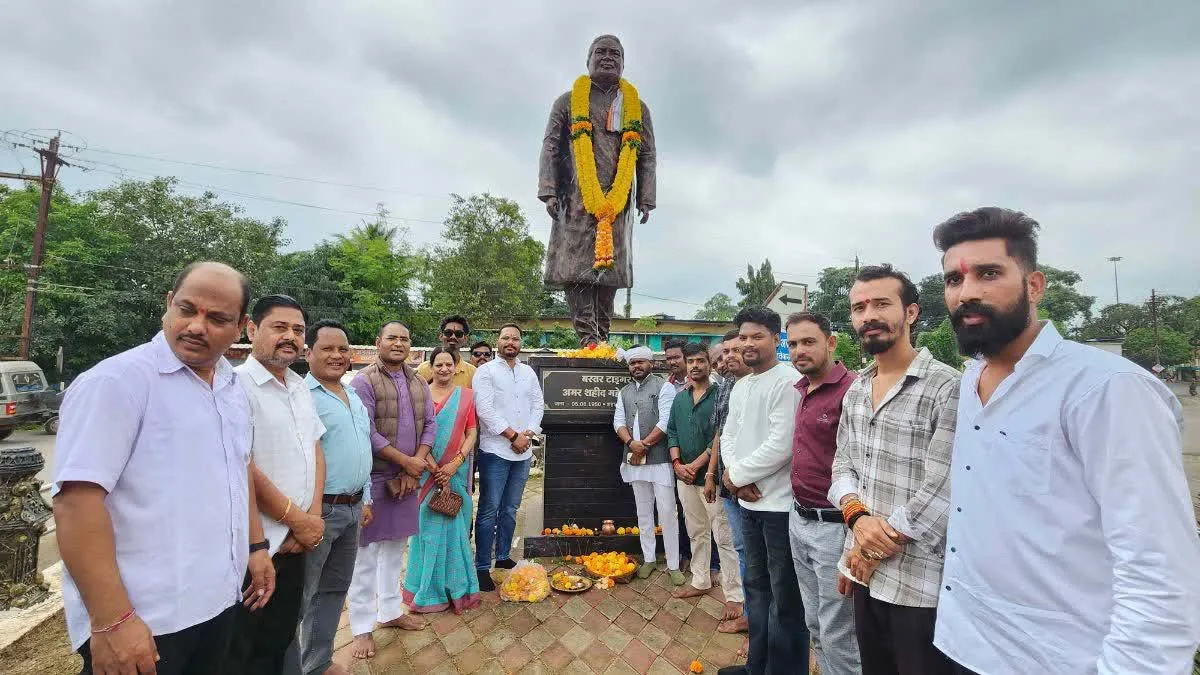
Former Chhattisgarh chief minister Bhupesh Baghel has echoed similar concerns, describing the verdict as incomplete justice. During his tenure, a second FIR and a special investigation team were set up to examine conspiracy angles, but those efforts lost momentum after a change in government. The family continues to live under high security cover, a lasting reminder of the threats that accompanied Karma’s public stance.
Assessing a Contested Legacy
Karma’s former colleagues and supporters insist that his contribution to the fight against Maoism cannot be reduced to the controversies surrounding Salwa Judum. They point out that the movement, whatever its later problems, originated as a response from tribal communities who had suffered under insurgent dominance. Some argue that the subsequent creation of specialised anti-Naxal forces, including the District Reserve Guard, built upon the principle of local participation that Karma had championed.
Others remain critical. They contend that the militarisation of civilians deepened cycles of violence and left lasting scars on Bastar’s social fabric. The debate reflects the larger difficulty of evaluating responses to insurgency in areas where governance was weak and ordinary people faced pressure from multiple armed actors.
What is less disputed is that Karma represented a rare figure: a tribal leader from the region who chose open political confrontation with the Maoists rather than accommodation or silence. His killing was celebrated by the insurgents as a major success, underscoring the threat they believed he posed.
The Wider Context of the Conflict
The Jhiram Ghati attack marked a turning point in the political understanding of the Maoist conflict. It demonstrated the capacity of the insurgents to strike at the heart of mainstream politics and forced a sharper national focus on the security situation in Bastar. In the years that followed, security operations intensified, and the Maoist presence in the region declined significantly, though the conflict has not entirely disappeared.
The recent court verdict provides a measure of legal closure for the families of the victims. It also serves as a reminder of the human cost paid by those who took public positions against the insurgency. For the Karma family, the question of whether every dimension of the attack has been examined remains open. For many in Bastar who remember the ‘Tiger of Bastar’, his willingness to confront the Maoists continues to define his place in the region’s troubled recent history.
The conviction of the ten accused is a significant judicial outcome after years of proceedings. Yet the fuller assessment of Mahendra Karma’s role—both as a mobiliser of local resistance and as a figure linked to a highly controversial campaign—will likely continue to be debated for years to come. In the complex landscape of Bastar’s past, his legacy remains as contested as the conflict he sought to challenge.
Read more – Thepowerfuldua.com , yandex-games.org