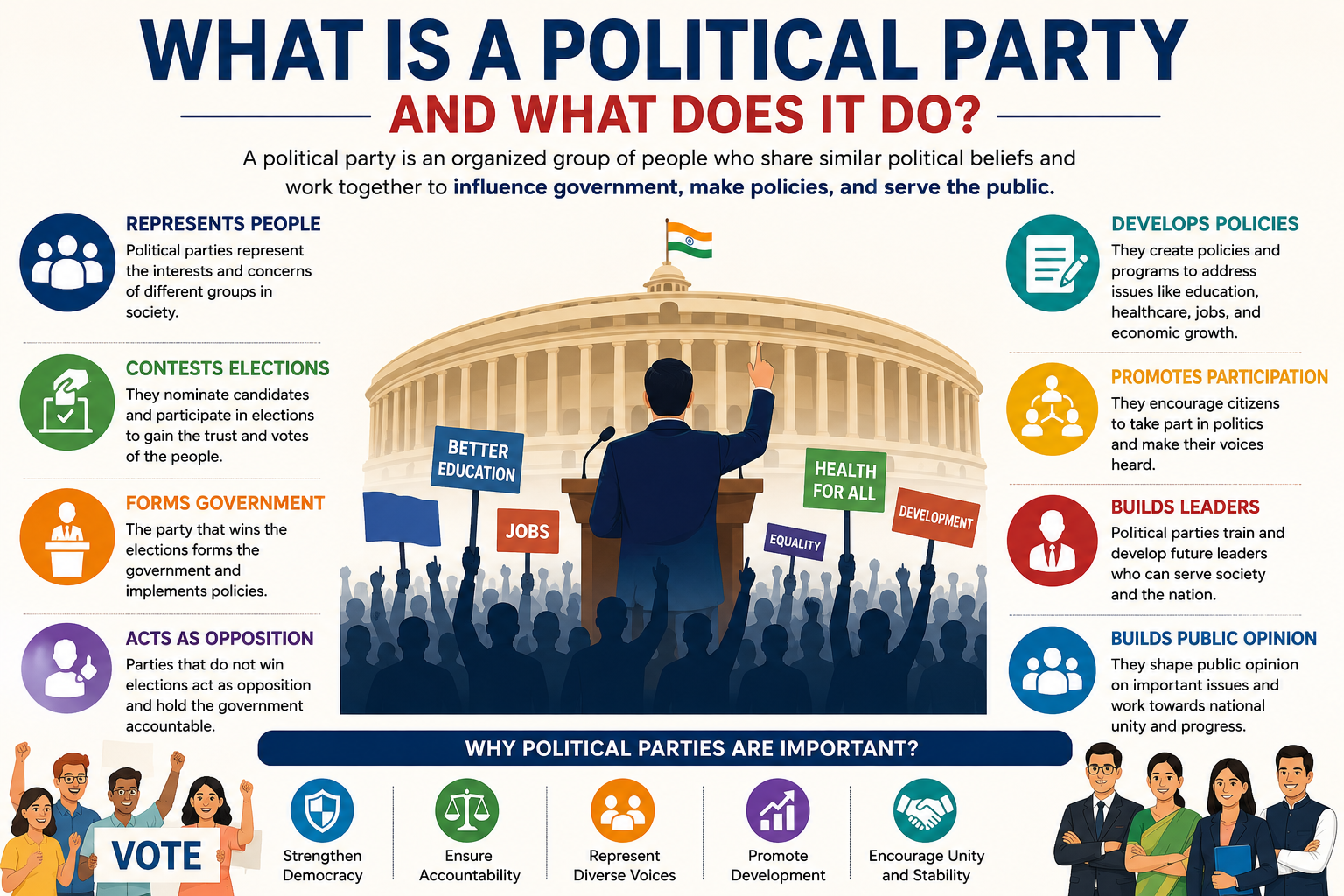

Political parties are one of the most important institutions in a democratic system. They play a crucial role in shaping government policies, representing citizens’ interests, and ensuring that democracy functions effectively. Every modern democracy relies on political parties to organize elections, select leaders, and provide voters with choices about how the country should be governed. Without political parties, it would be difficult to maintain an organized government or effectively represent the diverse opinions and interests of the people.
A political party is more than just a group seeking power. It is an organized body of individuals who share similar political beliefs, values, and goals and work together to influence public policy and govern the country. Political parties connect the government with the people and serve as a bridge between citizens and political institutions.
Understanding the Meaning and Definition of a Political Party
A political party is an organized group of people who share common ideas about how society should be governed and work together to gain political power through elections. Political parties develop policies and programs that reflect their beliefs and present them to voters during elections. If they win enough seats or votes, they form the government or become part of the governing coalition.
Political parties exist in almost every democratic country and are considered essential to representative democracy. They help organize public opinion, encourage political participation, and ensure that different sections of society have a voice in the political process.
How Political Parties Developed Throughout History
Political parties did not exist in the earliest forms of democracy. Over time, as societies became larger and governments more complex, organized groups began forming to represent different interests and ideas. During the eighteenth and nineteenth centuries, political parties emerged in many countries as voting rights expanded and more citizens gained the opportunity to participate in elections.
As democratic systems developed, political parties became more structured and organized. They established leadership systems, created formal memberships, and developed clear political ideologies. Today, political parties are central institutions in democratic governance and play a significant role in both national and local politics.
Representing the Interests and Concerns of Citizens
One of the primary functions of a political party is to represent the interests of different groups within society. Citizens often have varying opinions on issues such as education, healthcare, economic policies, taxation, and national security. Political parties bring together people with similar views and advocate for policies that address their concerns.
Through public meetings, campaigns, and interactions with communities, political parties understand the needs of the people and raise those concerns within government institutions. This process ensures that citizens have a voice in decision-making and that governments remain accountable to the public.
Contesting Elections and Seeking Political Power
A major responsibility of political parties is participating in elections. Political parties nominate candidates who represent them in local, regional, and national elections. These candidates campaign on the party’s principles, policies, and promises to gain public support.
Elections provide citizens with the opportunity to choose between different political parties and their proposed policies. By participating in elections, political parties make democratic governance possible and give people the power to decide who will lead and represent them. Winning elections allows political parties to implement their programs and policies through government institutions.
Forming and Running the Government
When a political party wins a majority in an election, it usually forms the government and assumes responsibility for governing the country. The governing party selects leaders and appoints ministers who oversee various departments and implement public policies.
Political parties in government make decisions on important issues such as economic development, education, healthcare, infrastructure, and foreign relations. They prepare budgets, pass laws, and manage public administration. Their success often depends on their ability to fulfill election promises and address the needs of citizens effectively.
Acting as the Opposition and Ensuring Accountability
Not all political parties become part of the government. Parties that do not win elections often serve as the opposition. The opposition plays an equally important role in democracy because it monitors the actions and decisions of the ruling government.
Opposition parties question government policies, point out weaknesses, and suggest alternative solutions to national issues. They help prevent the misuse of power by ensuring that the government remains transparent and accountable. A strong and effective opposition contributes to healthy democratic governance and protects the interests of citizens.
Developing Policies and Political Programs
Political parties spend significant time developing policies and programs that reflect their ideology and vision for society. These policies may address issues such as employment, social welfare, environmental protection, economic growth, and public services.
Political parties present their policy proposals to the public through manifestos and campaign promises during elections. These programs help voters understand what a party stands for and what changes it hopes to achieve if elected. Clear policies also enable citizens to compare different parties and make informed decisions.
Promoting Political Participation and Civic Education
Political parties encourage citizens to participate in the political process. They organize meetings, conduct campaigns, and engage with communities to educate people about political issues and the importance of voting.
By involving citizens in discussions and decision-making, political parties strengthen democratic values and increase public awareness of national issues. They also encourage young people and marginalized groups to become involved in politics, helping create a more inclusive and representative political system.
Recruiting and Training Future Leaders
Political parties serve as platforms for identifying and developing future political leaders. They provide opportunities for individuals to gain experience in public speaking, leadership, policymaking, and governance.
Many national leaders begin their careers by working within political parties at local levels before advancing to higher positions. Through training programs and organizational activities, political parties help prepare future leaders who can effectively serve the public and contribute to national development.
Building Public Opinion and National Unity
Political parties play an important role in shaping public opinion on national and international issues. Through speeches, campaigns, and policy discussions, they inform citizens about important matters affecting society.
Political parties can also contribute to national unity by bringing together people from different backgrounds who share common goals and values. By encouraging dialogue and cooperation, they help create a sense of participation and belonging among citizens.
Challenges Faced by Political Parties in Modern Democracies
Despite their importance, political parties face several challenges in today’s world. Increasing political polarization, declining public trust, the spread of misinformation, and internal divisions can weaken political institutions. In some countries, voters have become dissatisfied with traditional parties and demand greater transparency and accountability.
Political parties must adapt to changing social and technological environments while remaining responsive to the needs of citizens. Building public trust and maintaining democratic values remain essential responsibilities for all political organizations.
Conclusion
Political parties are the foundation of representative democracy and play a crucial role in connecting citizens with government institutions. They represent public interests, contest elections, form governments, hold leaders accountable, develop policies, and encourage political participation. Whether serving as the ruling party or the opposition, political parties contribute significantly to the functioning of democratic societies.
A healthy democracy depends on strong, responsible, and transparent political parties that prioritize the needs of the people and work toward the development and well-being of society. Understanding what political parties are and what they do helps citizens appreciate their importance in shaping governance and protecting democratic values.