
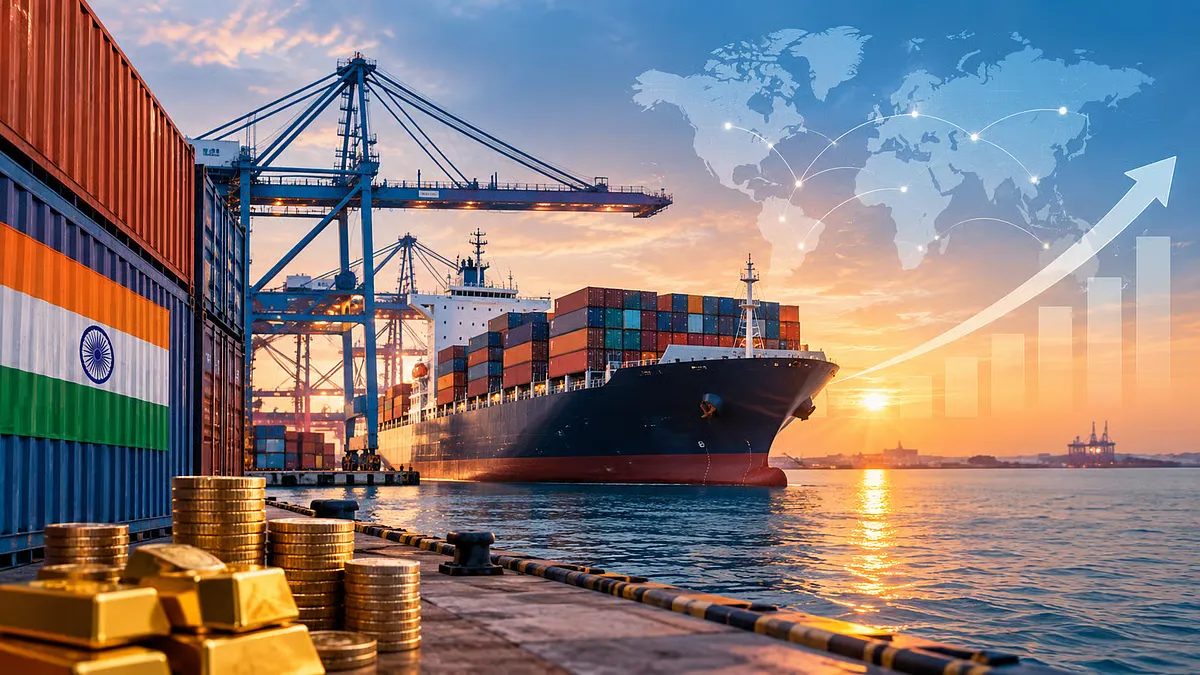
India’s merchandise exports recorded a robust 26 percent year-on-year increase in August 2026, reaching $43.81 billion compared with $34.74 billion in the same month of the previous year. The surge marked one of the strongest monthly performances in recent years and the highest export value ever recorded for the month of August. A key driver was the sharp recovery in shipments to the United States, which rose more than 21 percent to approximately $8.3 billion from $6.8 billion a year earlier—the strongest monthly jump in exports to Washington this calendar year.
Lower Tariffs and a Favourable Base Effect
The most significant factor behind the rebound in US-bound exports was the change in the tariff environment. In August 2025, trade tensions had led to a rapid escalation of duties on Indian goods. Reciprocal tariffs of 25 percent came into effect early in the month, followed by an additional levy linked to India’s oil purchases that pushed the effective rate on some products as high as 50 percent by late August. Those elevated duties disrupted shipments and created a depressed base for year-on-year comparisons.
By August 2026 the tariff burden had eased considerably. Indian exporters faced substantially lower additional duties—reported in the range of around 10 percent on top of most-favoured-nation rates for many products—compared with the peak levels of the previous year. The reduction restored competitiveness for a range of Indian goods in the American market and allowed exporters to regain volumes that had been constrained a year earlier. The combination of a lower base and improved market access produced the sharpest monthly rise in US shipments recorded so far in 2026.
Currency Depreciation Added Competitiveness
A second supportive factor was the depreciation of the Indian rupee. The domestic currency had weakened by more than 10 percent against the US dollar over the relevant period. A softer rupee made Indian goods relatively cheaper in international markets, enhancing price competitiveness across a broad range of products. This currency effect amplified the gains from lower tariffs and contributed to the overall 26 percent expansion in merchandise exports.
Broad-Based Sectoral Strength
The export recovery was not confined to a single market or product category. Several major sectors posted strong growth. Electronic goods exports rose sharply, increasing by nearly 90 percent. Engineering goods, which form a substantial share of India’s merchandise basket, grew by around 25 percent. Petroleum product shipments expanded by more than 60 percent. Other categories, including certain agricultural and marine products, also contributed positively.
This sectoral breadth indicates that the upturn reflected genuine demand and improved competitiveness rather than a temporary spike in one or two commodities. Official data showed that a large number of principal commodities recorded growth in both value and volume terms, pointing to a more balanced expansion.
Diversification Across Markets
While the United States remained the single largest destination and the standout performer in August, growth extended to other important markets. Shipments to China rose substantially, and exports to several other destinations—including members of the BRICS grouping and a range of emerging economies—also strengthened. This wider geographic spread reduced reliance on any single market and demonstrated improving resilience in India’s export portfolio.
Commerce ministry officials highlighted that demand had picked up not only from traditional partners such as the US and the European Union but also from a broader set of countries. The diversification is viewed as an important structural development that can help buffer future external shocks.
Trade Deficit Narrows Despite Higher Imports
Merchandise imports also increased in August, rising about 14 percent to roughly $70.7 billion. Higher purchases of crude oil, electronic items, project goods and certain industrial inputs contributed to the rise. Nevertheless, because export growth outpaced import growth both in percentage and absolute terms—an uncommon occurrence—the merchandise trade deficit narrowed slightly to $26.86 billion from $27.20 billion a year earlier.
Including services, overall exports (goods plus services) grew more than 25 percent, while the combined trade deficit also improved. The ability of exports to grow faster than imports in value terms was described by officials as a noteworthy development for the month.
Context of Ongoing Trade Negotiations
The improvement in US-bound exports occurred against the backdrop of continuing trade discussions between India and the United States. While an additional 10 percent tariff had been applied earlier in the year on certain Indian goods, the overall duty environment in August 2026 remained far more favourable than the peak restrictions of August 2025. Exporters appear to have adapted to the prevailing tariff structure and capitalised on the relative improvement.
Momentum and Outlook
Commerce Secretary Rajesh Agrawal noted that export momentum was continuing to build. The August numbers reflected not only higher prices in some categories but also increased volumes, suggesting healthier underlying demand. Cumulative merchandise exports for the April–August period of the current financial year also showed solid double-digit growth, reinforcing the sense of a sustained recovery after the disruptions of the previous year.
Looking ahead, the sustainability of this performance will depend on several factors: the evolution of tariff and non-tariff measures in key markets, the trajectory of the rupee, global demand conditions, and the ability of Indian exporters to maintain competitiveness in electronics, engineering goods and other high-growth segments. The broader geographic diversification already visible in the data provides a degree of insulation against concentrated risks.
A Turning Point in the Export Narrative
The 26 percent jump in August exports stands out for both its magnitude and its composition. The recovery in shipments to the United States—driven by lower tariffs relative to the previous year—combined with currency support, sectoral strength and market diversification to produce one of the strongest monthly performances in recent times. The narrowing of the trade deficit further underscored the positive shift in the balance of trade flows.
For policymakers and businesses alike, the August data offer evidence that Indian exporters can respond effectively when external conditions improve. The challenge now is to consolidate these gains, deepen market access through ongoing negotiations, and continue building a more diversified and resilient export base capable of sustaining higher growth over the medium term.
Read more – pokerslive.com
